
MRI Scan
An MRI scan uses powerful magnets and radio waves to create detailed images of internal organs and tissues. It’s non-invasive, painless, and useful for diagnosis and monitoring.
Starting from £295 ↗
Is a health worry weighing on your mind? Get clarity sooner with fast access to private medical scanning.
Book a diagnostic scan near you. No GP referral needed and no waiting lists.
An MRI scan uses powerful magnets and radio waves to create detailed images of internal organs and tissues. It’s non-invasive, painless, and useful for diagnosis and monitoring.
Starting from £295 ↗
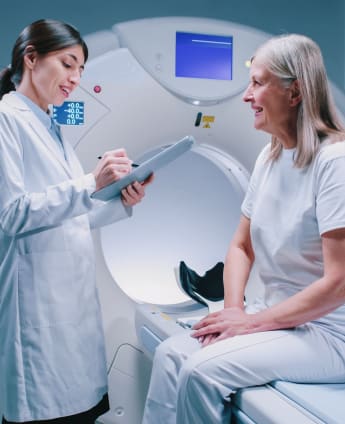
CT scans can be used to detect, locate and monitor diseases and abnormalities in the brain, neck, chest, abdomen, pelvis and blood vessels, and to assess bones, joints and fractures.
Starting from £370 ↗

X-ray scans are used to investigate medical conditions and symptoms, including chest pain, broken bones, fractures, tumours and more.
Starting from £100 ↗

Ultrasound is a safe medical imaging method that uses high-frequency sound waves to create pictures (sonograms) of the joints, soft tissues, organs, and blood vessels.
Starting from £180 ↗

An echocardiogram is a type of ultrasound scan specially for the heart. It uses high-frequency sound waves to create images of the heart and how it is functioning.
Starting from £285 ↗


and select a scan centre location that fits your needs.

to review your symptoms, ask questions, and understand your scan options.

through a call from the scan centre to make sure everything is set.

at a trusted partner centre, supported by experienced radiographers and clinicians.

delivered digitally and easy to share with your GP, specialist, or any onward care provider.
Getting a scan can feel overwhelming, but it does not have to.
We handle the details, guide you through each step, and make sure you feel informed and supported from booking to results.
We’re the UK’s largest imaging network. Take your pick from over 300 CQC-regulated clinics.

4.8 (46 reviews)
Tessa Jowell Health Centre, 72H E Dulwich Grove, East Dulwich, SE22 8EY

4.8 (110 reviews)
Frognal Avenue, Sidcup, Kent, DA14 6LT

No. Booking with Scan.com means you don’t need a referral from your GP or specialist. Once you’ve booked your scan, a member of our in-house medical team will review it and contact you to ask a few questions regarding your symptoms and reason for booking. They’ll then write a referral on your behalf and send it to your chosen scanning centre, ready for your appointment.
Your appointment time will depend on your symptoms and the type of scan you’re having. X-rays generally take a few minutes, while an ultrasound may take around 30 minutes. An MRI scan takes 30 to 90 minutes, and a CT scan is typically completed within 30 minutes. Your booking confirmation will provide details on how long you can expect your scan to take.
Book your private scan with Scan.com, and you’ll have the choice of over 250 UK-wide locations. Appointments are available with no waiting list, usually within a week. Some clinics offer appointments the next day.
You can expect to receive your scan images and report within seven working days of having your scan.
An MRI scan is used to assess the bones, soft tissues (including the muscles, ligaments and tendons), organs, brain, spinal cord and nerves. MRI scans don’t expose patients to radiation, but they can take up to 90 minutes and may be difficult if you have claustrophobia. A CT scan is used to assess the bones, soft tissues, heart and lungs in great detail. Faster than an MRI scan (usually less than 30 minutes), they’re used when an MRI scan isn’t suitable, but they do expose patients to radiation.
X-rays are best for detecting fractures in bones and for assessing the health of the heart and lungs in the chest. Ultrasounds are used to assess lumps and bumps, including cysts, nodules and tumours, monitor pregnancies and assess blood vessels, soft tissues and the organs of the abdomen and pelvic cavity. MRI scans are used to assess musculoskeletal pain and neurological symptoms, and to detect abnormalities throughout the body. CT scans are used in emergency situations and when an MRI scan is unsuitable. If you’re still unsure, book a consultation for a no-obligation chat with one of our medical experts.