
There’s no avoiding the truth: men delay seeing their doctor and visit their GP around 30% less frequently than women.
Why men avoid health checks (and why it matters)
According to Men’s Health Forum, men tend to prioritise their work over their health, citing concern that if their employer knew about a health problem, it would negatively impact their income and prospects. Other major barriers include fear, embarrassment, a “wait and see” approach and pressure to “man up”.
The consequence of delaying routine check-ups and ignoring worrying symptoms is that men have a lower life expectancy, in part due to medical conditions being diagnosed later.
The checks worth knowing about
If you have a specific concern or want a proactive baseline, a men’s health scan can provide answers. The following scans are most relevant to men’s health. Each one is available without a GP referral.
Prostate MRI
Prostate cancer is the most common cancer in men in the UK. Most cases are slow-growing, and the earlier it’s detected, the more treatment options are available. Symptoms to watch out for include difficulty urinating, a frequent or urgent need to urinate, a weak urine flow, needing to get up to urinate in the night, blood in your urine or semen and erectile dysfunction.
Doctors use a combination of tests to investigate prostate concerns, including PSA (prostate specific antigen) blood tests and MRI scans. A PSA test measures a protein produced by both healthy and cancerous prostate cells. Elevated levels can indicate prostate cancer, but may also be caused by inflammation or infection. A raised PSA is not a cancer diagnosis.
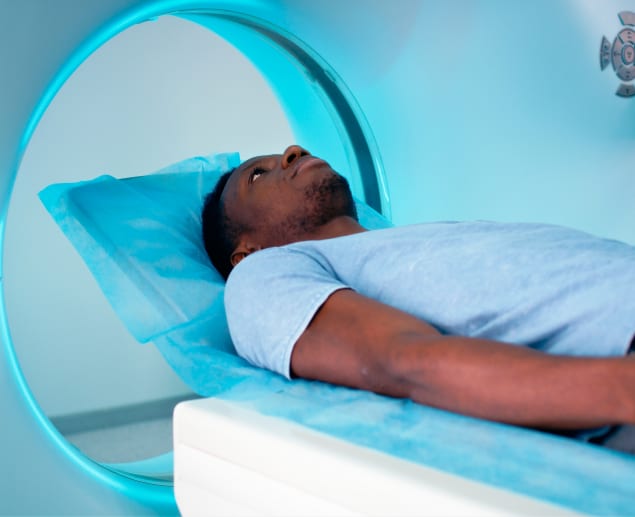
A prostate MRI scan provides detailed images of the prostate and the surrounding soft tissues. It can identify suspicious areas, tumours, prostate enlargement, infection and inflammation. Private prostate MRI scans are suitable for men over the age of 45 with urinary symptoms, a family history of prostate cancer or an elevated PSA result.
The ReIMAGINE Study, conducted by researchers from UCL, UCLH and King’s College London, found that an MRI scan alongside a PSA blood test is more accurate than a PSA test alone. If symptoms are worrying you, a private prostate MRI will either provide peace of mind or help you make earlier treatment decisions.
Cardiac CT (calcium scoring)
As we age, heart attack risk increases, and risk factors like high blood pressure, high cholesterol, smoking, stress and being overweight compound it. Taking steps to reduce those factors matters. But understanding what’s already happening inside the coronary arteries gives you a more precise picture.
A cardiac CT scan measures calcium build-up in the arteries. Calcification indicates atherosclerosis (the narrowing and blockage of arteries by fatty plaques) and is a reliable predictor of future heart attack risk, potentially before symptoms appear. This is different from an echocardiogram, which assesses how the heart is functioning rather than the condition of the arteries.
Cardiac CT is quick, painless, and provides a useful baseline for monitoring your heart health over time. If an incidental finding is flagged, you may require follow-up.
DEXA body composition scan
Looking at our body shape and weight gives us some idea of our fitness. But understanding our body composition provides us with much greater insight into what’s actually contributing to our shape.
Body composition refers to levels of bone, fat mass, lean body mass (muscle) and water. Rather than a single number on the scales, body composition evaluates what our bodies are made of.
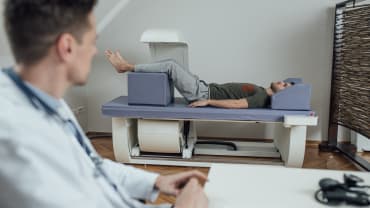
A DEXA body composition scan is a low-dose X-ray that takes a few minutes and provides a detailed analysis of body composition, including bone mass, density and strength, body fat percentage and lean muscle mass distribution.
For active men, this is performance data: insight that can support training and nutrition decisions. For men concerned about bone health, it provides a detailed picture of bone loss, whether age-related or caused by low vitamin D levels or certain medications, such as some steroids, antidepressants and proton pump inhibitors used to reduce stomach acid.
Full body MRI
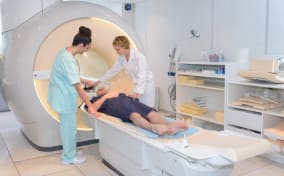
If you have a family history of cancer or vascular disease, want a proactive baseline, or simply want a comprehensive picture of your internal health, a full body MRI provides detailed imaging from head to pelvis, including organs, soft tissues and bones.
It can detect some early signs of some cancers, organ abnormalities, vascular problems including narrowing and blockages, inflammatory conditions including arthritis and spinal abnormalities such as compressions, herniations and pinched nerves.
A full body MRI doesn't guarantee it can reliably detect or rule out all medical conditions. But it is proactive and can provide insight into your internal health, helping you take action earlier.
Testicular ultrasound
Testicular cancer is the most common cancer in men aged 15 to 49. Symptoms include a swelling or lump in the testicle, an enlarged testicle, an ache or a pain in the scrotum or a heavy, pulling feeling.
Finding a lump is understandably alarming, but most testicular lumps are benign (non-cancerous), and if testicular cancer is found, it has a higher survival rate when caught early.
A testicular ultrasound takes around 20 minutes and distinguishes between benign cysts and suspicious masses that warrant further investigation. You may feel some discomfort if you have a tender lump or swelling, but the scan itself isn’t painful.
Diagnostic musculoskeletal MRI
Persistent joint or back pain can significantly interfere with work, exercise and daily life to the point that it becomes normal. Pain in the knees, ankles, shoulders or lower back often leads to compensating, rather than investigating. Getting a diagnosis changes that.
MRI scans produce detailed images of the joints, bones, muscles and soft tissues, including the tendons and ligaments. They can identify ligament and tendon tears, soft tissue damage, nerve compression, disc problems and conditions such as cartilage damage, labral tears, meniscal tears, shoulder impingement and herniated discs.
Getting a diagnosis often significantly changes the management of a condition. If you’ve lived with joint pain for years, an MRI puts you on the path to appropriate treatment.
When should you book a private scan?
If you have symptoms that are bothering you, get them checked. Scan.com has over 250 scanning clinics across the UK. Appointments are typically available within a week, and results follow in a few days, along with a clear path forward.
You don't need specific symptoms to book, and you don’t need to wait. A whole body MRI and a cardiac CT scan can identify early potential concerns, and a DEXA scan provides detailed information about your body composition and bone health.
Do you need a GP referral?
No. Booking a private men’s health scan with Scan.com doesn’t require a GP referral or a specialist's letter. Choose a time and location, and our clinical team will review your booking and handle the referral. If you need support booking the right scan, we can help with that too.
Most men who book a scan say the same thing: they wish they'd done it sooner. Ignoring symptoms is normal; living with them indefinitely is not. A scan appointment might mean a morning off work: the not-knowing can drag on for months.